How much does it cost to go to an emergency room in Arkansas? More than you might think! The answer, though, requires a closer look:
Let’s first dive into ER billing for a better idea of what you can expect to pay.
There are four main charges found in the typical ER bill: triage, facility, professional, and supplies. We’ll cover each of the four fees and then compare typical fees to what you can expect if you’ve experienced care at an emergency room in Arkansas.
The triage fee is, in short, a sorting charge. Your triage fee includes your initial assessment. Once you’ve been registered and assessed a medical professional will gauge what medical services are required. The term “triage” literally means to sort or categorize. This fee can range anywhere from $200 to $2,000.
According to UAMS in Little Rock, a registered nurse will determine the severity of your condition and how quickly you need to be seen. If available, a physician will begin your medical evaluation.
In some cases, an emergency room will use the term “evaluation” rather than triage. They are still referring to the healthcare professionals who initially determine what care you’ll need.
The definition of a facility charge varies from hospital to hospital. In some instances, the facility charge applies when you’re given an actual room in the ER. Rooms in the ER aren’t cheap and usually come in around $1200. This number typically accounts for your nurse’s time with you.
In other instances, the facility charge is more akin to a “cover charge.” Meaning, the facility charge can include any number of items. According to some hospital executives, the facility charges are the fees that allow them to keep the lights on and the doors open. They can account for diagnostics to administrative costs. And facility fees can vary widely!
The physicians fee applies to the fees that the acting physician charges, separate from the hospital itself. The doctor who cares for you will charge their own fee in addition to the fees charged by the hospital. This fee, however, should be included with your emergency room bill.
The American Medical Association outlines a national standard for professional charges.
You can expect the physicians fee to account for roughly half the cost of your emergency room visit.
Your supplies fee refers to any medical supplies that are used during the course of treatment.
Depending on treatment needed, the supplies fee can be minimal or extremely high. On average, hospitals in Arkansas and the southeastern United States charge more for supplies than in other areas of the country.
Contact Personal Injury Attorneys in Arkansas
How do Arkansas hospitals compare? Typically, hospitals in Arkansas will combine the triage fee and facility fee into one charge labeled “ER Charge” on the billing. But they’ll outsource other charges.
In other words, if you visit an emergency room in Arkansas you may encounter three separate bills: the hospital bill, the ER physician’s bill, and the radiology bill.
If you visit an emergency room in Arkansas you can expect the “ER Charge” to cover your in-the-door initial fee, evaluation fees, nursing fees, room charges, and the additional facility fees that cover various other hospital expenses.
While some hospitals, including UAMS and Arkansas Children’s Hospital, will utilize in-house professional charges, most hospitals in Arkansas will outsource their professional charges to a third party. This third-party doctor will bill you separately from the hospital.
Additionally, radiology readings may also be outsourced and billed separately from the hospital. If you get a CT Scan, X-Ray, or ultrasound, it’s possible you’ll have a third bill to pay after your visit to the ER.
The average cost of an ER visit in Arkansas is $1,400. This total includes facility charges, triage fees, physician’s fees, radiology, and supplies. It also accounts for inflation which has had a tremendous effect on the cost of healthcare services in Arkansas.
It’s worth noting that some services can be met at an Urgent Care. You may not realize that the cost of some services will be significantly less at an Urgent Care compared to the cost of those same services at an emergency room.
These services include stitches, x-rays, chest pain tests, and broken bone splinting until surgery is needed. These prices range from $300 to $10,000 (only once surgery is involved). In fact, most health insurance cover the cost of an Urgent Care visit or have a minimal co-pay in comparison to an ER co-pay.
Keep in mind that some common conditions or tests can cost you a lot more than you’d think at an ER. Acute bronchitis, although small, can end up costing $814. A sore throat in the ER will run around $600, lower back pain and medicines will be $750, and finally a dressing need or suture removal averages $350 (Corso).
The phrase “let’s run some tests” or “we want some images just to be sure” can be costly at an emergency room. X-rays (on adults, because children’s pricing can be even higher) are going to run you anywhere from $75 for a basic extremity all the way up to $200. Children’s prices are even higher because of the extra care that goes into pediatric medicines and image testing.
The next basic image testing is an MRI without dye contrast. This is going to cost between $368 and $720. This range is so big because the more important the area looked at (ex: brain, neck, etc), the more it’s going to cost because of the amount of care involved (mdsave).
Finally, an MRI with dye contrast usually involves a nerve block and putting the patient under, therefore, it’s a pretty penny. These MRI’s range from $710 to $945.
The Emergency Severity Index utilizes five levels of acuity to indicate how urgent a patient’s condition and needs are. The five acuity levels range from Level 1 to Level 5.
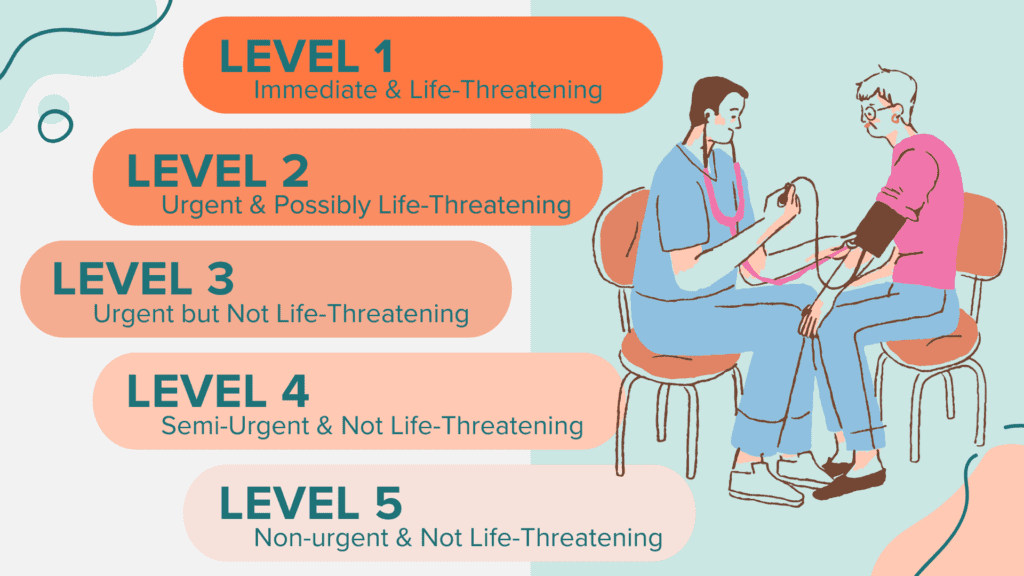
Level 1 is the highest level and indicates immediate and life-threatening.
A patient assigned Level 2 is experiencing emergent needs that could possibly be life-threatening.
Level 3 is the most common and indicates urgent care is required but a non-life threatening injury.
Patients assessed Level 4 are also non-life threatening and only semi-urgent.
Level 5 indicates the patient’s needs are non-urgent and needs treatment as time permits.
If you are assessed a Level 4 or 5, you could be and will be waiting much longer compared to a Level 1 or Level 2 patient.
Does your acuity level change how much your emergency room bill is? Absolutely. The average ER price changes based on the severity level of your condition.
To read more about acuity levels and associated costs visit HERE.
No Fees Unless We WinGet In Touch With Us
1-800-305-0529
In 2022, the No Surprises Act was passed in Arkansas in order to help save families from unexpected emergency room medical costs. The No Suprises Act dictates that hospitals are not allowed to send patients any “out of the blue” medical bills that could be financially devastating to you and your family.
Most states adopted this law as well, making it where almost all consumers have new protections when receiving emergency room cares, urgent care visits, and air-ambulance services, the last two being in the ‘out-of-network’ category.
The law physically restricts hospitals from sending excessive out-of-pocket costs and covering any emergency services, regardless of whether your provider(s) are in or out of network (insurance.arkansas.gov).
If you happen to receive a medical bill after insurance has paid their part, it can still be a lot of money. There are things like deductibles and contracted amounts involved and this can all be very confusing.
If this happens to you and you need help paying, there are some hospitals that have Charity Care Programs. This is a program through the patient advocacy department of your hospital. Once you get a bill, just reach out to them and see what is able to be done. Another couple things to remember though; one; not all hospitals have this and two; these are income based programs.
Contact Taylor King Law helps accident victims across Arkansas understand and manage unexpected medical expenses, including emergency room bills that follow a serious injury. Our firm has offices in Arkadelphia personal injury lawyer, Conway personal injury lawyer, Fort Smith personal injury lawyer, Hot Springs personal injury lawyer, Jonesboro personal injury lawyer, Little Rock personal injury lawyer, Rogers personal injury lawyer, and Springdale personal injury lawyer, making it easier for injured individuals statewide to access legal guidance close to home. When an injury leads to overwhelming medical bills, working with an Arkansas personal injury lawyer who understands hospital billing practices and state insurance protections can help protect your rights and pursue fair compensation.
Written by: Chloe Veuleman
Awards and accolades


Taylor King
Taylor King opened the first office in 1994 and has been practicing law for more than 30 years. Those who know him best would describe him as “laser-focused,” which is good news for his clients and bad news for his golf opponents.
Memberships & Professional History

This page has been written, edited, and reviewed by a team of legal writers following our comprehensive editorial guidelines. This page was approved by attorney Taylor King, who opened the firm’s first office in 1994 and has been practicing law for more than 30 years.

Early voting has officially begun in Arkansas! It is Bradi Bear here, your favorite legal pup, alerting you to ALL THINGS vo...
In personal injury cases, affirmative defenses can be partial or complete defenses, which affirm the plaintiff’s allegation...
Pain and suffering is quite different from hard costs that are quantifiable such as medical expenses, doctor's bills, and so ...
Please describe your accident and the injuries you sustained. One of our experienced injury lawyers will contact you for a free case evaluation. If we’re able to assist and you’re unable to travel, we can meet you at your home, workplace, or hospital.

call for a free consultation
820 W 3rd Street
Little Rock, AR 72201
Phone: 501.712.2554
Toll-Free: 1.877.455.4790
Fax: 870.246.0529
410 N Thompson Street, Suite B
Springdale, AR 72764
Phone: 479.935.1761
Toll-Free: 1.877.283.1274
Fax: 870.293.2475
320 Main Street
Arkadelphia, AR 71923
Phone: 870.246.0505
Toll-Free: 1.877.665.0873
Fax: 870.246.0529
2620 Prince Street
Conway, AR 72034
Phone: 501.712.2554
Toll-Free: 1.877.696.8695
Fax: 870.246.0529
1920 East Matthews Avenue
Jonesboro, AR 72401
Phone: 870.568.1158
Toll-Free: 1.877.589.2660
Fax: 870.520.5099
3801 Rogers Avenue
Fort Smith, AR 72903
Phone: 479.668.3198
Toll-Free: 1.877.899.3202
Fax: 479.234.4216
 call
call  message